
Underkeep Best Build: Stats and Skills by Class
Underkeep best build guide: stat priorities, weapon locks, and the skill order that makes each of the seven classes work in a real party.
The best Underkeep build is not one universal stat spread. Each class has a main stat that drives its damage or mana, a weapon type its skills require, and a small set of skills worth taking before the rest. This page gives the working build for all seven classes.
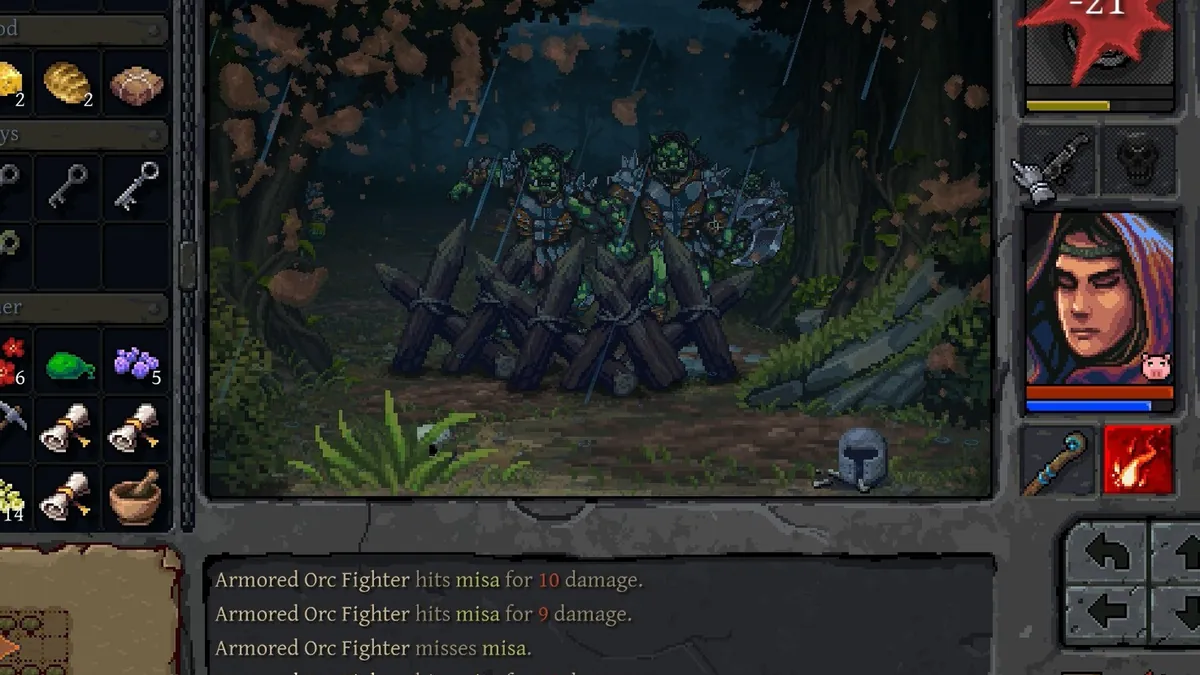
What stats matter in Underkeep?
Five stats do the heavy lifting. STR drives melee base damage, DEX drives crit and ranged hit chance, WIS drives mana and elemental resistance, and END drives blood magic and poison resistance. Armor is a separate defensive value from gear and skills.
| Stat | What it affects | Classes that want it |
|---|---|---|
| STR | Base melee damage (STR / 2 + weapon) | Warrior, Paladin |
| DEX | Melee crit (DEX / 10), ranged crit (DEX / 7), evasion | Thief, Ranger |
| WIS | Mana per level (2 + WIS), elemental resist (WIS x 2) | Wizard, Voidcaller, Paladin |
| END | Blood magic resist (END x 2), poison duration | Blood Mage, anyone fragile |
| Armor | Reduces physical damage after base damage | Front row first |
The formulas come from in-game tooltips as transcribed by the Steam community guide. They explain why a Warrior with a strong weapon still hits like a wet noodle without STR, and why a Ranger misses back-row casters without DEX. The combat page→ works through the full damage equation.
Warrior build: one weapon line, then taunt
Pick a weapon and commit. Flurry Thrust wants a sword, Skull Rattle wants a mace, Slice and Dice wants an axe, Cleave wants two-handed, and Shield Bash wants a shield. A Warrior who splits across three lines has three weak skills.
| Priority | Skill | Why |
|---|---|---|
| 1 | Flurry Thrust or Slice and Dice | Reliable single-target damage |
| 2 | Provoking Shout | Redirects attacks away from the party |
| 3 | Shield Bash | Stun plus passive armor with a shield |
| 4 | Battle Roar | Party damage and crit buff |
The Flow of Life is a passive worth taking early because it adds max HP and elemental resistance without spending an action. Champion's Grip is a free action at level 4 and belongs in every Warrior build. The equipment page→ explains which weapon line each skill locks you into.
Paladin build: Zeal engine
Paladin wants to spend Zeal every round and get armor back from Divine Guard. Lay on Hands is the safety valve, Stun Undead is the hard control, and Judgment is the payoff at level 6.
Take Divine Guard as soon as it is available. Every Zeal spend then adds armor for a round, which turns a heal into a defensive buff. Righteous Strike is a free action that builds Zeal, so it belongs in the rotation even when you are not attacking.
Thief build: bleed first, crit second
Thief damage is a two-step process. Bleeding Dash applies bleed, then Backstab the Weak adds crit chance per negative effect, and Shadow Lunge hits bleeding or poisoned targets for bonus damage. Skip the setup and the Thief looks weak.
Cloak of Swiftness and Evasive Roll keep the Thief alive in the front row. Mark the Dead is worth a slot because it raises the whole party's damage against one target, not just the Thief's.
Bleed and poison do not work on undead. Against skeletons, switch to raw Backstab crits or let the Wizard handle the room.
Ranger build: marks and execution
Ranger is the simplest damage build in the game. Aimed Shot is the reliable opener, Hunter's Prey marks a target for the whole party, and Execution Shot punishes the marked target. Quickshot is a good low-cost filler when stamina is tight.
Cloak of Swiftness and Deadly Shot are the passives that make the build work. Skirmisher's Step is a free action that raises evasion and the next basic attack, which is excellent before a boss burst.
Wizard build: one element, then coverage
Wizard builds should start with one element and add coverage later. Fire Spark applies burn, Ice Shard freezes, and Static Shock hits two enemies. Dragon Arcana boosts all three, so it is the best passive in the kit.
| Level | Pick | Reason |
|---|---|---|
| 1 | Fire Spark or Ice Shard | Cheap, reliable damage |
| 2 | Feel the Flow | More mana for every fight |
| 3 | Dragon Arcana | Boosts every element |
| 6 | Fireball or Ice Tower | Group damage for late dungeons |
Shielding Barrier is a self-survival tool, not a party tool. Cast it when a ranged enemy is targeting the Wizard, not on cooldown.
Voidcaller and Blood Mage builds
Voidcaller is a support build: Void Mend first, one aura second, Void Lance for defense-ignoring damage. Aura of Blades is the best default for a physical party; Aura of the Void is better for a fragile caster party. Unholy Convergence is the boss debuff that makes the whole party hit harder.
Blood Mage is the hardest build to play well. Blood Lance is the basic attack, Crimson Renewal is the off-heal, and Leechcraft at level 5 is the skill that makes the HP cost sustainable. Against undead, expect a 30% damage penalty and let another class carry the room.
FAQ
Can you respec in Underkeep?
No respec system has been announced. Build the hero in the party creator and treat the skill order as permanent for that save.
Which stat should you raise first?
Raise the class main stat first: STR for Warrior and Paladin, DEX for Thief and Ranger, WIS for Wizard and Voidcaller, END for Blood Mage. Then add survivability.
Is a hybrid build viable?
Hybrids are weaker because weapon skills are locked to specific weapon types. A Warrior with a sword and a mace pays for both lines and masters neither.
Community source: Steam community player guide ↗
Official source: Underkeep on Steam ↗
Official source: Rake in Grass Underkeep page ↗
More Underkeep Guides
How Underkeep combat works: one action per hero, free actions, damage and armor math, crit and evasion formulas, status effects, and turn order.
What is confirmed about Underkeep endings: multiple outcomes, the quests that matter, why special dialogue is not always best, and how to save for branches.
Underkeep equipment explained: weapon types per class, armor slots, how armor and sharpness change damage, which tools share the budget, and when to upgrade.
How Underkeep exploration works: which tools open which obstacles, how to search walls and graves, food and resting, and Waystone fast travel.
The Underkeep first party for a blind run: four heroes, race picks, early skills, gear priorities, and the first purchases that keep the run alive.
How Underkeep front row and back row positioning works: who can melee, when Reach bypasses the rule, what swapping costs, and the safest four-hero layout.
What to do when the four gargoyles get stuck in Underkeep Gravewood Crypt, why there is no reset lever yet, and how to recover without losing the run.
A spoiler-light Underkeep guide hub: what to do in the first hours, which systems matter, and which of our 25 pages answers your question.