
Underkeep Best Weapons: Lines, Skills and Upgrades
The best weapon lines in Underkeep by class: sword, axe, mace, two-handed, dagger, bow and shield, with the skill locks and upgrade order that matter.
Quick answer. Underkeep does not have one best weapon. The best line is the one your class can use and your party needs: sword for Flurry Thrust and reliable accuracy, axe for Slice and Dice, mace for Skull Rattle and armored targets, two-handed for Cleave and raw damage, dagger for Thief speed, bow for Ranger range and shield for Paladin defense. Damage is base minus armor plus Sharpness, so a sharpened mid-tier weapon usually beats a dull high-tier one.
- Skills are locked to weapon types.
- Sharpness is a damage multiplier you can control.
- Armor subtracts from every hit.
- Casters do not use weapons at all.
- The best weapon is the one that matches your row and skills.
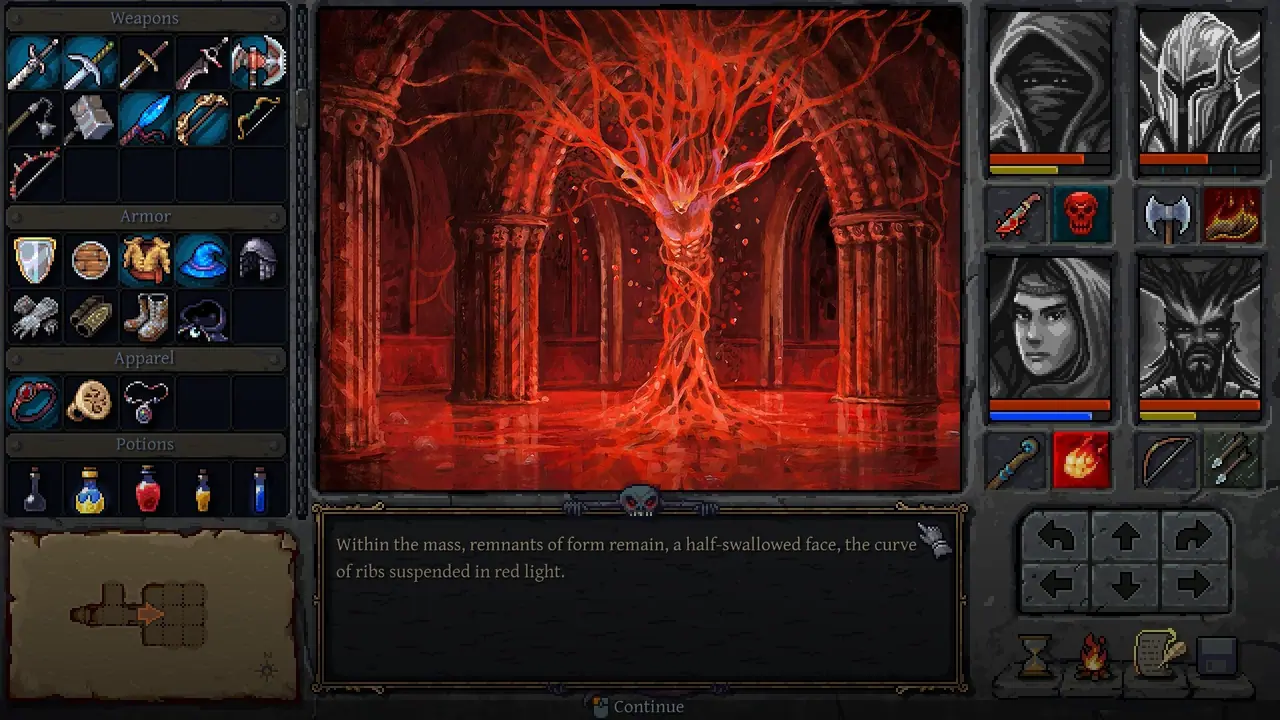
Rake in Grass has not published a named unique-weapon tier list. This page ranks weapon lines and class fit, not drops that cannot be verified.
The damage formula
Underkeep's combat math is simple enough to plan around: damage = base − armor + Sharpness. That means three things:
- A high-base weapon is not automatically better if the target's armor is high.
- Sharpness is a direct addition, so maintaining it is worth more than chasing a small base increase.
- Two-handed and axe lines trade accuracy or defense for base damage; against armored targets, the subtraction hurts them more.
The combat guide→ covers turn order and stamina. The equipment guide→ covers armor slots and the upgrade order.
Weapon lines by class
| Weapon line | Classes | Signature skill | Best use |
|---|---|---|---|
| Sword | Warrior, Thief | Flurry Thrust | Reliable single-target damage |
| Axe | Warrior | Slice and Dice | Multi-hit pressure |
| Mace | Warrior | Skull Rattle | Armored and undead targets |
| Two-handed | Warrior | Cleave | Raw damage, front row |
| Dagger | Thief | Class skills | Speed and utility |
| Bow | Ranger | Class skills | Back-row ranged damage |
| Shield | Paladin | Shield Bash | Defense and control |
| None | Casters | Spells | Mana-based damage and support |
The skill lock is the important column. A Warrior who builds around swords cannot use Skull Rattle without switching to a mace, and a Paladin's Shield Bash requires a shield. Plan the weapon around the skill you intend to use, not the other way around.
Best by role
Front-row damage: two-handed or axe
The two-handed line has the highest base damage and Cleave, which makes it the default for a Warrior who wants to end fights quickly. The trade-off is that two-handed weapons leave no shield slot, so the front row takes more damage. Pair the line with a Paladin or a second front-liner who can absorb hits.
Axe is the middle ground: Slice and Dice gives multi-hit pressure, and the one-handed grip leaves room for a shield or off-hand item. Against groups, axe is often the better practical pick even when the two-handed base is higher.
Armored targets: mace
Skull Rattle is the reason to carry a mace. Armor subtracts from every hit, so a line that ignores or reduces that subtraction is worth a slot against skeletons, constructs and heavily armored bosses. The mace is slower against unarmored trash, which is why it is a swap rather than a permanent default.
Reliable single target: sword
Flurry Thrust is the sword's signature and the most straightforward damage skill in the game. Sword is the safest pick for a new Warrior because it does not depend on a multi-hit roll or a specific enemy type. It is also the Thief's alternate line when you want more base damage than a dagger.
Back row: bow
The Ranger's bow keeps the character out of the front row, which protects a low-armor class and frees the front row for a Warrior and Paladin. The bow's weakness is that it does not help the party's defense; a Ranger who only shoots will lose the damage race against a boss with high armor unless the party brings a mace or a caster.
Defense: shield
The shield is a weapon line only for the Paladin because Shield Bash is a skill, not a passive. A Paladin without a shield loses both the bash and a large amount of armor. Do not treat the shield as optional on a Paladin unless you are deliberately running a damage build.
Sharpness and armor
Sharpness is the upgrade that pays back fastest. It adds to every hit, it applies to every weapon line, and it does not depend on the enemy type. Before you buy a new weapon, sharpen the one you have.
Armor is the counter. Against a high-armor target, a fast weapon with low base damage loses more of each hit to subtraction than a slow weapon with high base. That is why the mace and two-handed lines exist: they are armor answers, not universal upgrades.
One main weapon and one armor-answer weapon is enough for most parties. A full inventory of sidegrades costs gold and food space without changing the fights you lose.
Upgrade order
- Food and cures. A party that runs out of food loses more fights than a party with a weak weapon.
- Main weapon. Sharpen it before replacing it.
- Body armor. The front row survives longer, which means more turns.
- Shield. Only if you have a Paladin.
- Tools. Pickaxe, shovel, lockpicks and the Golden Chisel open content; they are not combat upgrades.
- Reserve weapon. A mace or axe for armored bosses.
The tier list→ ranks classes rather than weapons. Use it to decide who carries which line, then use this page to decide what to sharpen.
Party fit
A balanced party usually has two front-row characters who can take a hit, one damage dealer with an armor answer, and one caster or Ranger in the back. The weapon lines follow from that:
- Warrior + Paladin: two-handed or axe on the Warrior, one-hand and shield on the Paladin.
- Warrior + Thief: sword on the Warrior, dagger on the Thief; add a mace swap for armor.
- Ranger + casters: bow on the Ranger, no weapon on the casters; the front row must hold without a second melee.
The best party page→ covers the full composition.
FAQ
What is the best weapon in Underkeep?
There is no single best weapon. Two-handed and axe lead on raw damage, sword is the most reliable, mace answers armor and shield is mandatory on a Paladin.
Can any class use any weapon?
No. Each class has a weapon pool, and skills are locked to weapon types. A Warrior can use swords, maces, axes and two-handed weapons; a Paladin uses one-handed weapons with a shield.
Is Sharpness better than a new weapon?
Usually yes. Sharpness adds to every hit and applies to every target, while a new weapon may only add a small amount of base damage.
Do casters need weapons?
No. Casters use spells and mana, not weapon lines.
Are there unique weapons?
Rake in Grass has not published a named unique-weapon list. Treat named drops from community posts as reports, not confirmed facts.

Official source: Underkeep on Steam ↗, Underkeep achievements ↗, Rake in Grass ↗
More Underkeep Guides
All seven Underkeep classes explained: main stat, resource, front or back row, weapon requirements, and the race that fits each one.
How Underkeep combat works: one action per hero, free actions, damage and armor math, crit and evasion formulas, status effects, and turn order.
Spare or kill the Underkeep dragon: the Durok quest you need first, the three Korr checks, the pillar route, and how to cross the fire field alive.
What is confirmed about Underkeep endings: multiple outcomes, the quests that matter, why special dialogue is not always best, and how to save for branches.
Underkeep equipment explained: weapon types per class, armor slots, how armor and sharpness change damage, which tools share the budget, and when to upgrade.
How Underkeep exploration works: which tools open which obstacles, how to search walls and graves, food and resting, and Waystone fast travel.
The Underkeep first party for a blind run: four heroes, race picks, early skills, gear priorities, and the first purchases that keep the run alive.
How Underkeep front row and back row positioning works: who can melee, when Reach bypasses the rule, what swapping costs, and the safest four-hero layout.