
Underkeep Characters: Races, Classes and Party Slots
Underkeep characters explained: six races, seven classes, a four-hero party, row rules and the race-class pairs that work without a trap.
Quick answer: Underkeep characters are built from six races and seven classes, and you field a party of four. Races give one trait each; classes set your main stat, resource, row and weapon type. There are no racial class restrictions, so any race can play any class, but Stoneborn, Slugman and Raven each carry a trade-off that can ruin a first run if you pick them blind.
This page is the overview. The deep pages cover each class and race in detail.
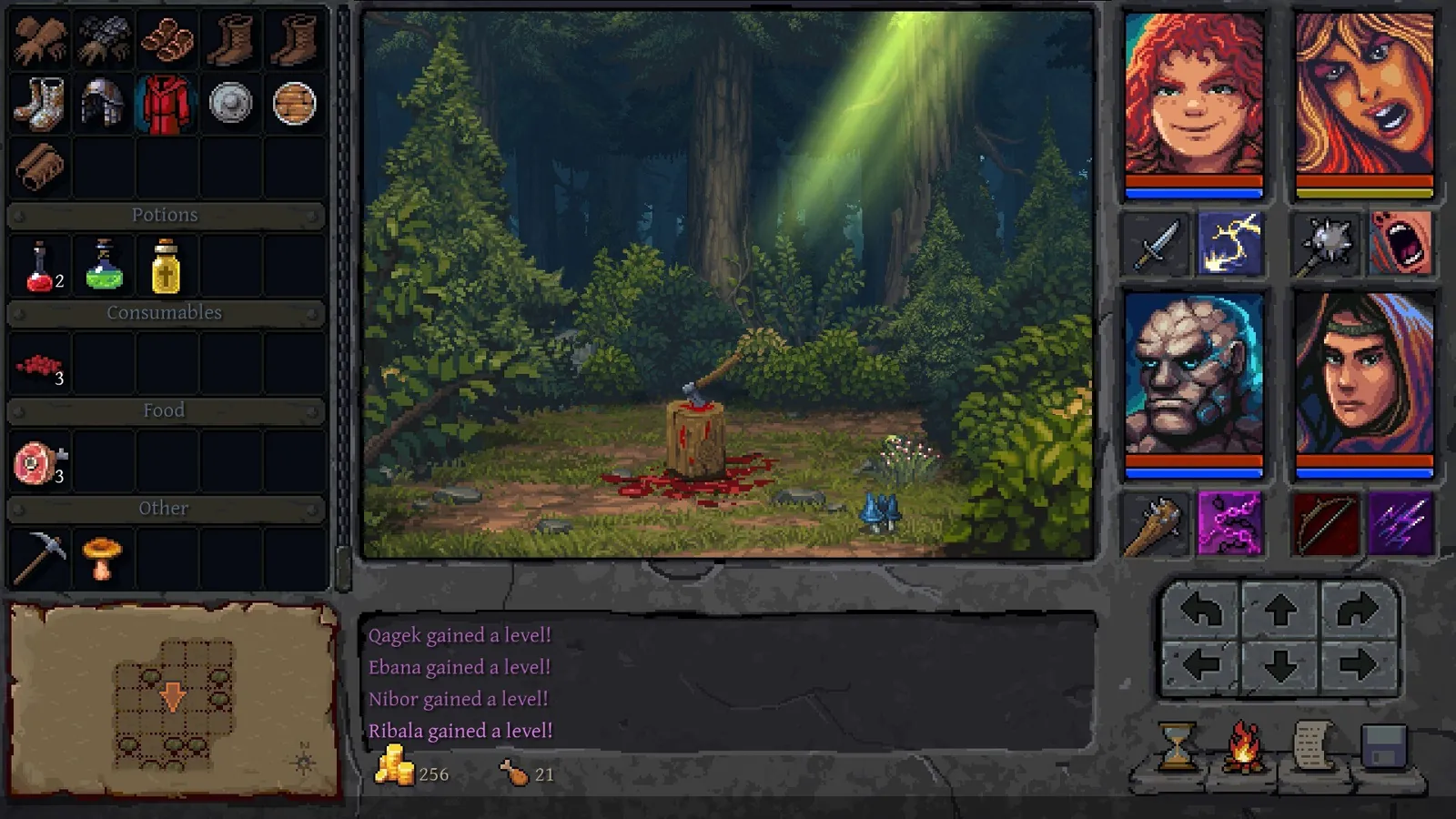
The six races
| Race | Trait | Best for | Cost |
|---|---|---|---|
| Human | Fast Learner: +10% XP | Any class, first run | No combat bonus |
| Dwarf | Deep Sight: +3% elemental resistance, infravision | Frontline tanks | Small percentage |
| Stoneborn | Stonebound: no body armor, +1 armor at levels 1, 5, 9, 13 | Bruiser Warrior | Loses the body armor slot |
| Raven | Twisted Blood: one good and one bad mutation | Gamblers, repeat runs | Random bad mutation |
| Elk | Beastwarden: +1 armor vs Animals | Early animal areas | Narrow condition |
| Slugman | Eye Stalks: immune to crits, double Fire damage | Mage or healer | Fire is common |
There are no racial skill trees. A Dwarf Wizard and a Human Wizard differ only by the trait, so race is a modifier on your build, not a second class.
The seven classes
| Class | Main stat | Resource | Row | Weapon focus |
|---|---|---|---|---|
| Warrior | STR | Stamina | Front | Sword, mace, axe, shield, two-handed |
| Paladin | STR, some WIS | Zeal | Front | One-handed weapons, shield |
| Thief | DEX | Stamina | Front | Dagger, sword |
| Ranger | DEX | Stamina | Back | Bows and ranged weapons |
| Wizard | WIS | Mana | Back | Spells only |
| Voidcaller | WIS | Mana | Back | Spells only |
| Blood Mage | END | HP plus bones | Back | Blood spells |
Four classes can hold the front row and three are built for the back. The row matters because enemies target the front by default, and a back-row class placed in front takes damage it was never designed to absorb.
The party of four
You create four characters, not one. The standard shape is:
- Front 1: Warrior, the damage and taunt.
- Front 2: Paladin, the off-tank and spot healer.
- Back 1: Wizard, elemental damage and freeze.
- Back 2: Voidcaller, healing, barriers and cures.
That is the safest blind-run setup because it covers damage, healing, status removal and back-row targeting. The best party page→ compares it with the damage-first Hunter's Pack and the Holy Order.
Race and class pairings that work
| Class | Good races | Why |
|---|---|---|
| Warrior | Human, Stoneborn, Dwarf | Human levels faster; Stoneborn adds armor without body armor; Dwarf adds resistance |
| Paladin | Human, Dwarf | Dwarf resistance helps a low-WIS frontliner; Human is the safe default |
| Thief | Human, Raven | Raven's mutations can push crit; Human is consistent |
| Ranger | Human, Elk | Elk helps in the animal-heavy early areas |
| Wizard | Human, Slugman | Slugman crit immunity protects a low-HP caster |
| Voidcaller | Human, Dwarf | Survival stats matter more than damage |
| Blood Mage | Human, Slugman | HP costs make crit immunity and XP both useful |
These are starting points, not rules. A Raven Warrior can be excellent on a second run, and a Stoneborn Paladin can work if you accept the armor loss.
What the game does not tell you
Race is permanent. Underkeep does not document a respec, so the race you pick at creation is the race you finish with.
Class skills are weapon-locked. A Warrior with a sword cannot use an axe skill. Decide the weapon line early and buy gear that matches it.
Party slots are fixed at four. There is no bench or reserve party in the field; the four heroes you create are the four you play.
Stoneborn sounds like the tank race, but losing body armor is a bigger penalty than +1 armor every four levels for most builds. Slugman sounds fragile, but crit immunity is strong against the right enemies. Read the trait, not the name.
Building a character in five steps
- Pick the role you are missing, not the class you like.
- Pick a race whose downside you can actually play around.
- Pick the weapon line before spending any skill points.
- Put the character in the row the class was designed for.
- Spend the first points on cheap, reliable skills rather than level-6 flash.
The classes page→ covers each role's skills, and the races page→ covers the trait math.
FAQ
How many characters can you create in Underkeep?
Four. The party is fixed at four heroes, with two front-row and two back-row slots.
Can any race play any class?
Yes. There are no racial class restrictions. The trait is the only difference, so a Dwarf Wizard is a valid pick.
What is the best race in Underkeep?
Human, for a first run. Fast Learner's +10% XP has no downside and compounds over a full playthrough.
Can you change your race or class later?
The game does not document a respec. Treat character creation as permanent and check the weapon requirement before committing to a skill line.
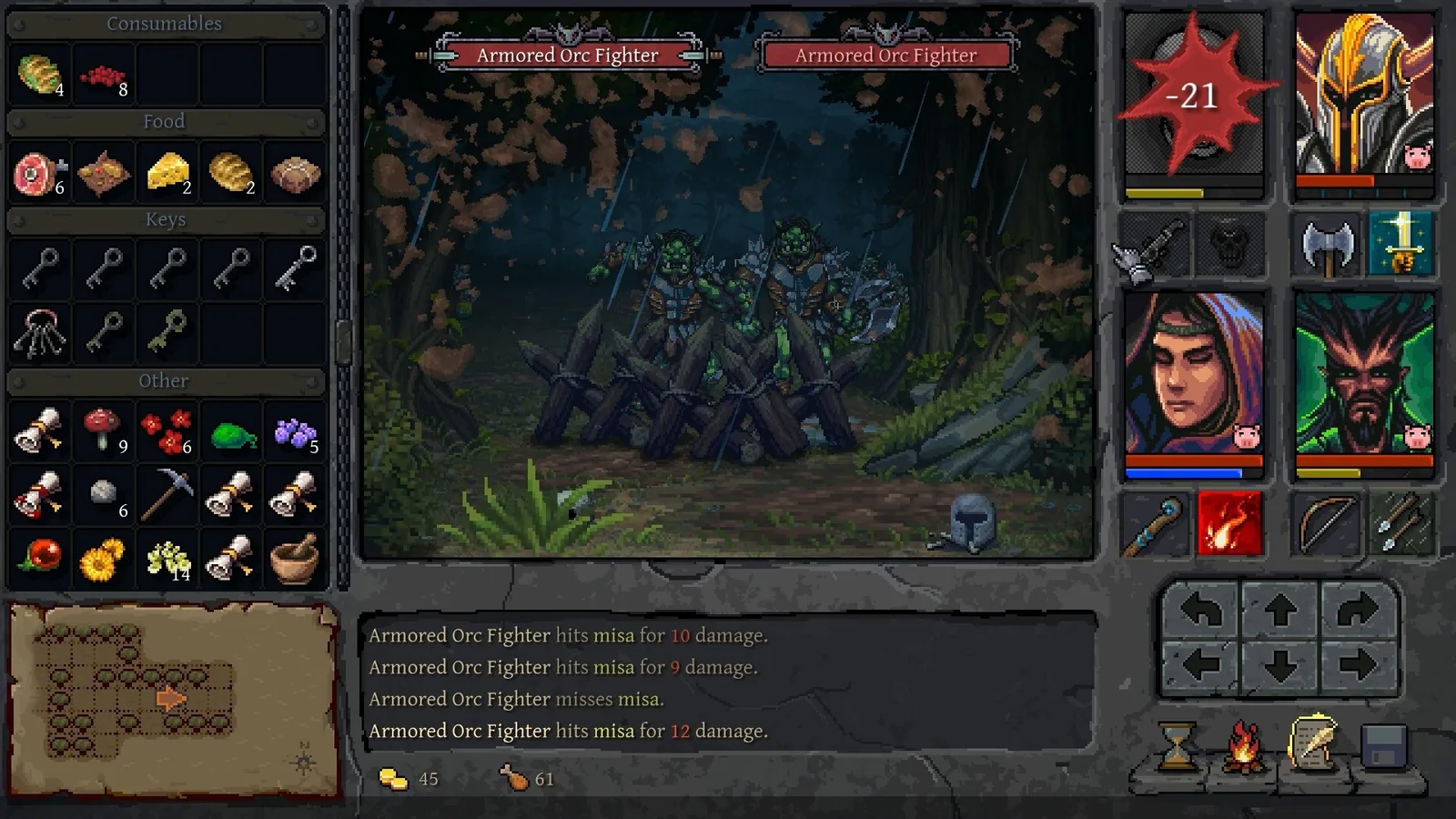
Official source: Underkeep on Steam ↗, the official news feed ↗, the Steam community hub ↗ and the in-game character creation screen.
More Underkeep Guides
Underkeep bosses listed with confirmed names, the fights that gate progression, the immunities to test, and the preparation checklist that prevents wipes.
All seven Underkeep classes explained: main stat, resource, front or back row, weapon requirements, and the race that fits each one.
How Underkeep combat works: one action per hero, free actions, damage and armor math, crit and evasion formulas, status effects, and turn order.
Spare or kill the Underkeep dragon: the Durok quest you need first, the three Korr checks, the pillar route, and how to cross the fire field alive.
What is confirmed about Underkeep endings: multiple outcomes, the quests that matter, why special dialogue is not always best, and how to save for branches.
Underkeep equipment explained: weapon types per class, armor slots, how armor and sharpness change damage, which tools share the budget, and when to upgrade.
How Underkeep exploration works: which tools open which obstacles, how to search walls and graves, food and resting, and Waystone fast travel.
The Underkeep first party for a blind run: four heroes, race picks, early skills, gear priorities, and the first purchases that keep the run alive.