
Underkeep Tips: 20 Things to Know Before You Descend
Twenty Underkeep tips that matter in the first ten hours: food, tools, weapon locks, row placement, revival costs and the racial traps to avoid.
Quick answer: The tips that change an Underkeep run most are boring ones. Build four heroes with two in the front row, buy food and a pickaxe before your first dungeon, check the weapon requirement before you spend a skill point, and keep enough gold for a revival at the statue. Combat is tactical, but most early deaths come from preparation, not from bad tactics.
Below are the twenty habits that matter most in the first ten hours, in the order you will need them.
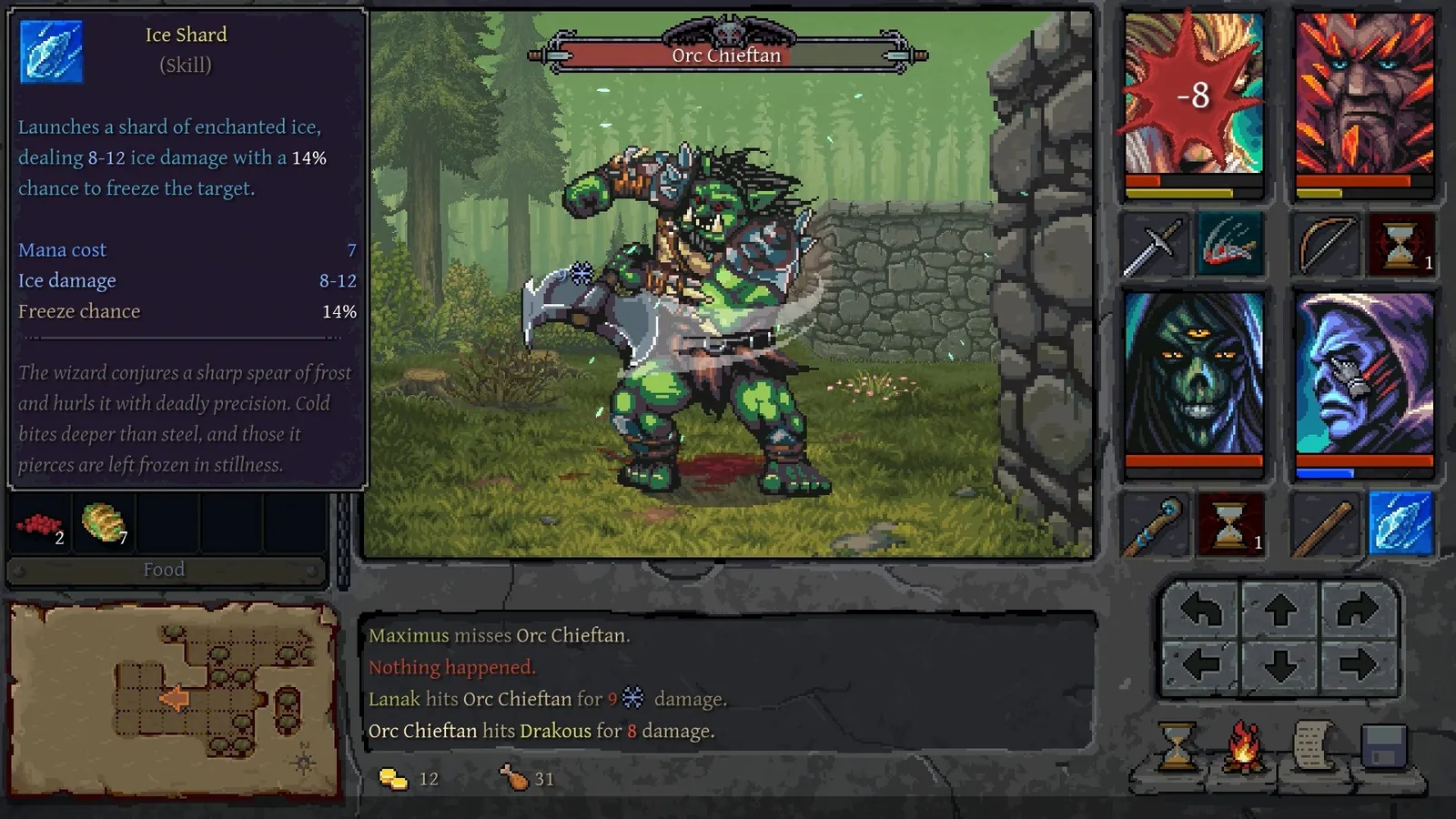
Party and build tips
- Build four heroes, not three. Underkeep is balanced around a full party. A four-hero group can cover two frontliners, a healer and a damage dealer.
- Put two characters in the front row. The front row takes the melee hits. A single tank means every enemy attack lands on one health bar.
- Use the classic first party. Human Warrior and Dwarf Paladin in front, Human Wizard and Human Voidcaller in back. It is the safest blind-run setup, and the first party guide→ explains each pick.
- Pick Human if you are unsure. Fast Learner gives +10% XP with no downside. It is the only racial trait that never becomes a liability.
- Do not pick Stoneborn for a Paladin. Stoneborn cannot wear body armor, which removes the slot a Paladin wants most. It is a Warrior race, not a tank-with-shield race.
- Treat Raven as a second-run race. Twisted Blood gives one good mutation and one bad one, and the bad one is random.
- Remember Slugman's fire weakness. Slugman is immune to crits but takes double fire damage. It is a fine caster race until you meet a fire-heavy room.
A Human party reaches key levels earlier, and an extra level before a boss is worth more than a small resistance bonus. On a blind run, consistency beats a gamble.
Money and shopping tips
- Buy food before anything else. Resting consumes food, and digging graves consumes food. A party with no food cannot rest, and a party that cannot rest fights every room at half strength.
- Buy a pickaxe and a shovel early. Ore and graves are locked behind tools, not behind levels. Lockpicks come next for chests.
- Keep 200 gold in reserve. Revival at a statue costs money. Going into a boss with 12 gold and a dead healer is how runs end.
- Do not sell spare gear too early. Gold is shared and gear is not. A spare sword is worth more on a bench hero than a few coins in the bank.
- Buy potions in stacks. Potions are free actions in combat, so a stocked bag is extra turns of healing.
Combat tips
- Check the weapon requirement before spending a point. Warrior and Thief skills are tied to specific weapon types. A sword skill on an axe Warrior is a wasted level.
- Open with control, not damage. Freeze, stun and taunt stop more damage than a big hit heals.
- Use Provoking Shout to protect the back row. At max level it redirects 100% of attacks, which saves a caster who got pulled forward.
- Take Divine Guard on the Paladin. It is a passive that turns every Zeal spend into armor, so healing also defends.
- Fight in corridors, not rooms. A narrow tile limits how many enemies can reach your front row. The combat guide→ covers positioning.
Exploration and quest tips
- Rest before every locked door. A locked door usually means a boss or a gauntlet, and entering either at half resources is a self-inflicted loss.
- Mark the silver door on the map. Hollowgrave's silver door is the route gate, and the key is not in Hollowgrave. The Silver Key guide→ covers the detour.
- Skip Gravewood Crypt if you are low on supplies. It is optional. The loot is good, but the resource drain can end a run that was not ready.
Two mistakes that cost more than they look
Hoarding for achievements on a first run. Doomsday Prepper (200 food), Bone Collector (200 bones) and Filthy Rich (1,000 gold) are second-run goals. Carrying 200 food through the early game means wearing worse armor at the exact moment armor matters.
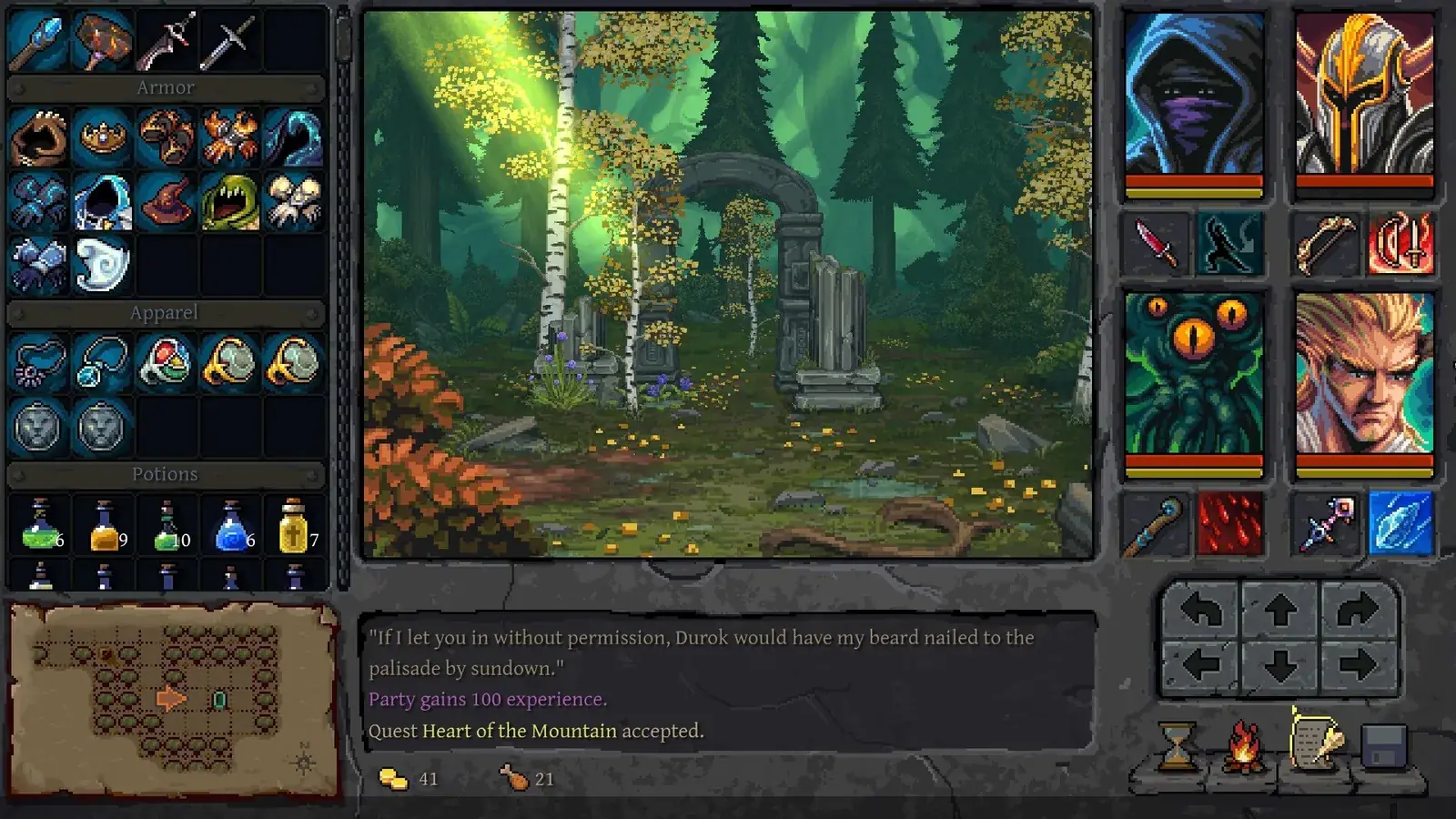
Ignoring the blacksmith quest order. Heart of the Barbarian is the blacksmith quest, and Patch 1.0.4 fixed a freeze that could happen if you found the barbarian helmet before accepting the quest. Accept the quest first, then turn in the helmet.
A first-hour checklist
| Step | Action |
|---|---|
| 1 | Create four heroes, two front and two back |
| 2 | Buy food, a sword, a pickaxe, a shovel and two potions |
| 3 | Clear the rooms nearest the dungeon entrance |
| 4 | Return to the village, sell loot, rest |
| 5 | Take the Hollowgrave route and mark the silver door |
| 6 | Detour to Fangroot and Orc Camp for the key |
FAQ
What is the most important tip for Underkeep?
Food and tools before gear. A party that can rest and open passages progresses faster than a party with a better sword and no pickaxe.
Can I respec my characters?
The game does not document a respec option, so treat every class, race and skill pick as permanent. Check the weapon requirement before spending a point.
How many heroes should I bring?
Four. The party is balanced around a full group, and the front row needs at least two characters who can take a hit.
Is Underkeep hard?
It is fair but unforgiving about preparation. Most deaths come from entering a boss room with no food, no cures or a dead healer.
Official source: Underkeep on Steam ↗, Patch 1.0.4 notes ↗ and the official news feed ↗.
More Underkeep Guides
Underkeep bosses listed with confirmed names, the fights that gate progression, the immunities to test, and the preparation checklist that prevents wipes.
All seven Underkeep classes explained: main stat, resource, front or back row, weapon requirements, and the race that fits each one.
How Underkeep combat works: one action per hero, free actions, damage and armor math, crit and evasion formulas, status effects, and turn order.
Spare or kill the Underkeep dragon: the Durok quest you need first, the three Korr checks, the pillar route, and how to cross the fire field alive.
What is confirmed about Underkeep endings: multiple outcomes, the quests that matter, why special dialogue is not always best, and how to save for branches.
Underkeep equipment explained: weapon types per class, armor slots, how armor and sharpness change damage, which tools share the budget, and when to upgrade.
How Underkeep exploration works: which tools open which obstacles, how to search walls and graves, food and resting, and Waystone fast travel.
The Underkeep first party for a blind run: four heroes, race picks, early skills, gear priorities, and the first purchases that keep the run alive.